

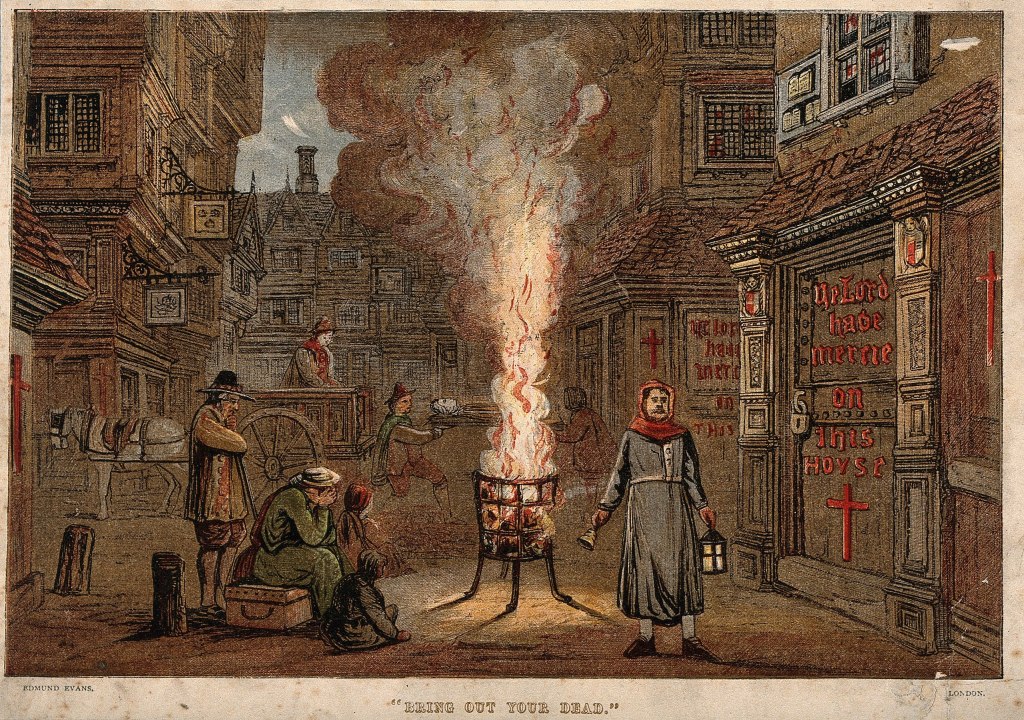
London in 1665 was an unhappy place. Bubonic place was sweeping London killing 100,000 people — then a quarter of London’s population — over 18 months. King Charles II fled London for Sailsbury, but when cases of the Plague were found in Sailbury the King, his Court and family moved to Oxford in September 1665.
News sheets could come from London but Charles was keen not to handle papers that had come from the plague-ridden city. He ordered that a newpaper be printed at the University Press.
The paper was printed under the authority of Lord Arlington, a statesman who had fought for Charles and, in 1665 was the Secretary of State for the Southern Department. This role was responsible for Southern England, Wales, Ireland, but also the US Colonies and Roman Catholic and Muslim countries of Europe. While printed under Arlington’s authority, the effort of the enterprise was delegated to Joseph Williamson, one of Arlington’s under-Secretaries.
This day the first of the Oxford Gazettes come out, which is very pretty, full of newes, and no folly in it. Wrote by Williamson.
Diary of Samuel Pepys, 22 November 1665
The paper was a sheet 11″ × 6″ printed on both sides, with the back page of that first issue was printed by Leonard Litchfield who was Printer to the University, but pre-dating the first centrally-provisioned printing works for the Oxford University Press. It was published twice a week on Mondays and Thursdays.
The Gazette was never intended for general circulation and with a target of officials, the legal profession and merchants. Circulation was around 6,000 by 1704 and copies purchased for Government use out-numbered those sold to the public.
The Gazette drew its contents from gentlemen, tradesmen, provincial officials, and later from the Privy Council, the Treasury, the Admiralty and the War Office. Although news came from many quarters, it sometimes was doctored or ‘masked’.
James Thomas, The Local Historian, 1982
By February 1666, the name had changed to the London Gazette for issue 24 onwards.

The London Gazette is still published today as the official journal of record, with a requirement for over 450 types of notice to be recorded in the Gazette. The Gazette makes the claim that theirs is the oldest continuously published newspaper in the UK, with Berrow’s Worcester Journal being the next-relative newcomer from 1690.
Year and Era
1665 / Craft
First published 7 November 1665
Object Type
Publication
Location
Oxford
Sources and More Information
- Thomas, James (November 1982), The Local Historian, British Association for Local History
- London Gazette site
An Appeal
If you have something linked to this object, please get in touch.
 British Letterpress in 100 Objects